Two painted wooden boards survive at St Nonna’s, Altarnun, both dating from the seventeenth century and both remarkable survivals of a period when scriptural texts and devotional scenes were increasingly displayed in parish churches. They belong to the Stuart age, and their figures, clothing and facial hair reflect the fashions of that period with surprising clarity. The boards are not sophisticated works of art, but they are historically valuable, and their survival in a moorland church gives them particular interest.
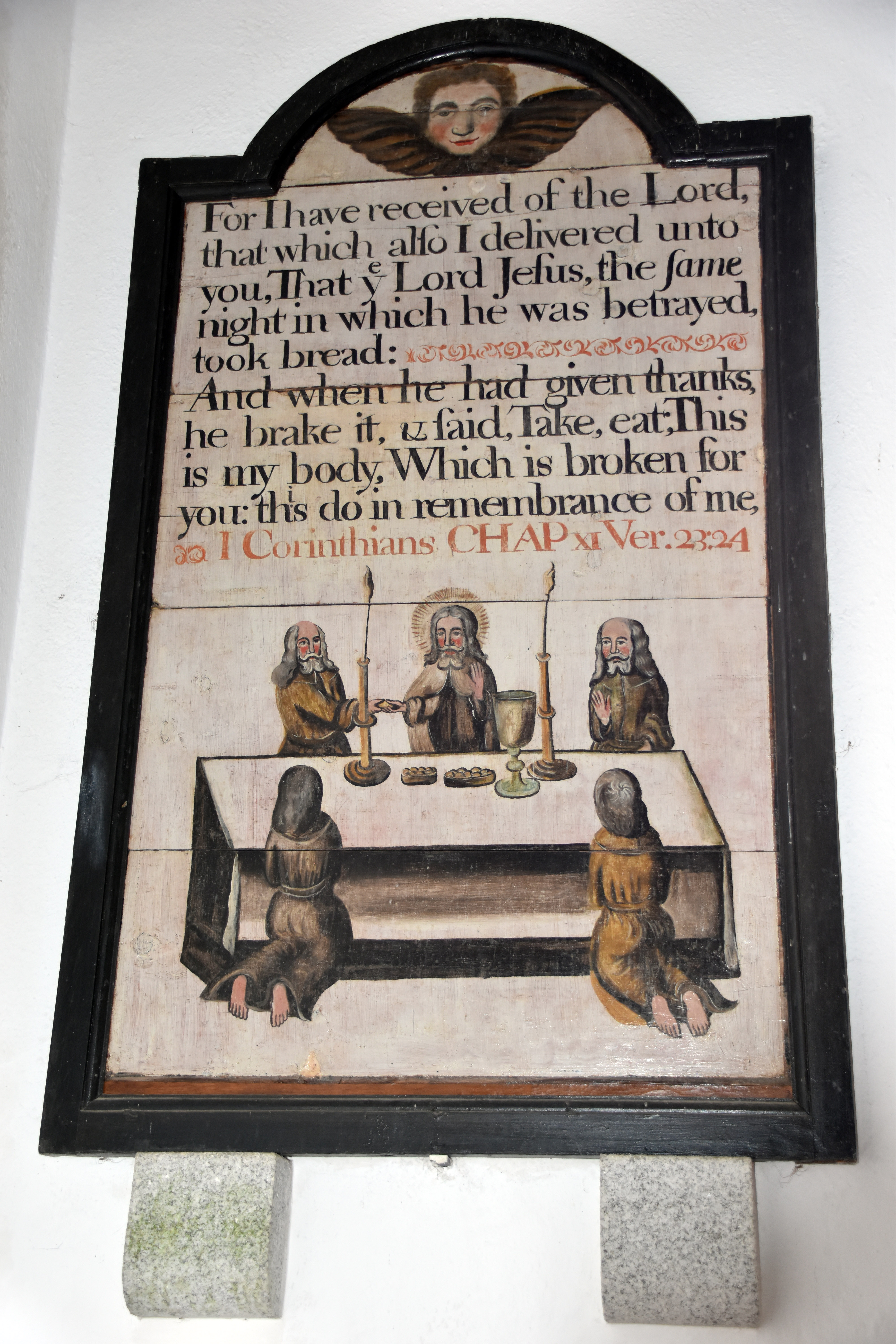
The first board, dated 1620, contains a painted transcription of 1 Corinthians 11:23–24 from the King James Bible. The text is accompanied by a primitive depiction of the Last Supper. Christ sits at the centre of a simple table, flanked by two apostles, and is shown blessing or breaking the bread. The table is sparsely furnished with a chalice and loaves. Two kneeling figures in the foreground face the table, representing communicants receiving the sacrament. Above the scene a winged cherub head fills the arched top of the board. The figures wear clothing typical of the early Stuart period: doublets with short standing collars, sleeves cut close to the arm, and hair worn longer than in the previous century. The men have the neatly trimmed moustaches and pointed beards fashionable in the reign of James I, a style familiar from contemporary portraits. The painter was no court artist, but the details are unmistakably of their time.
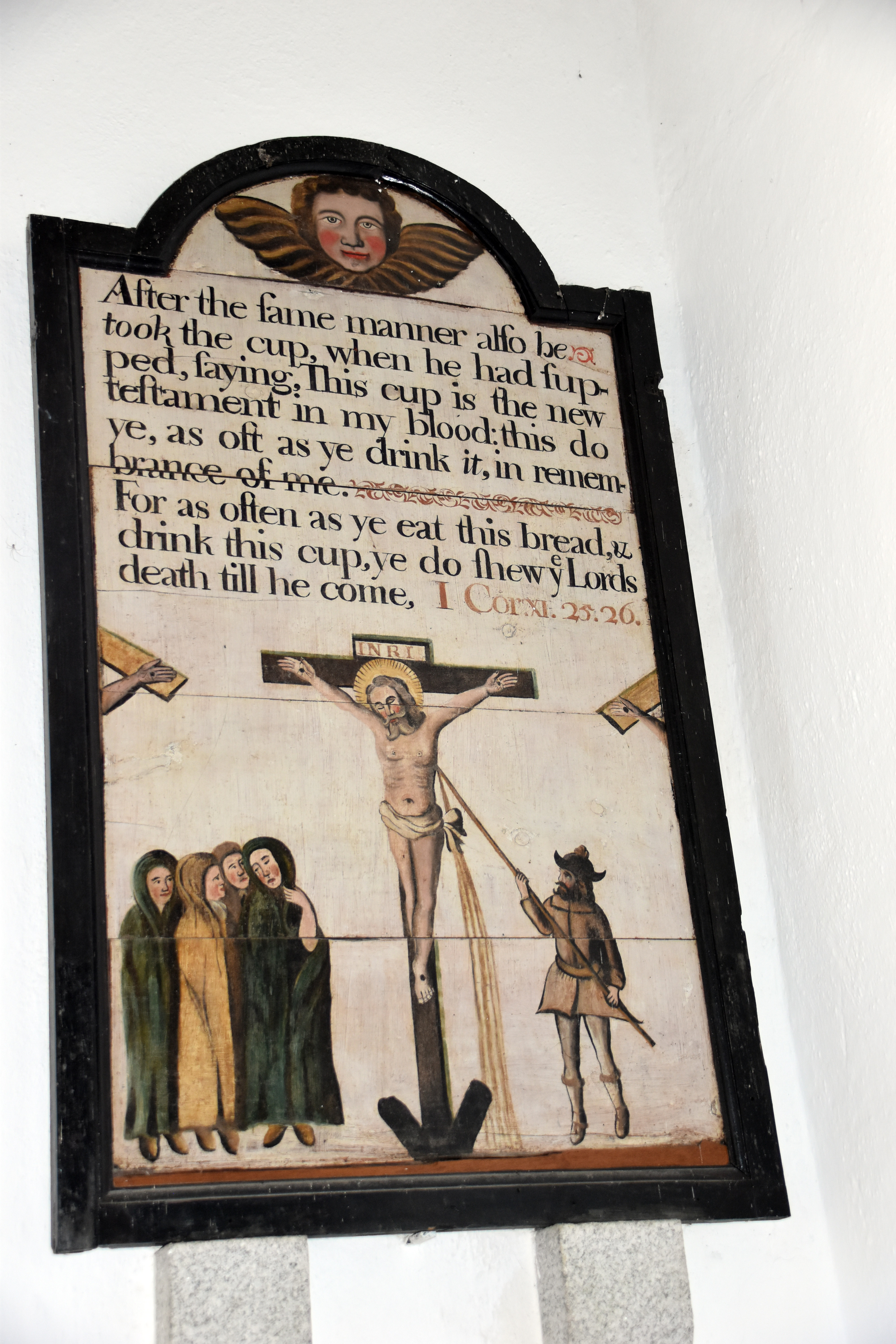
The second board, painted later in the seventeenth century, depicts the Crucifixion with donors. Christ hangs on the central cross, flanked by the two thieves. At the foot of the cross stand four women, including the Virgin Mary, their robes painted with the flowing movement characteristic of late‑seventeenth‑century devotional art. On the opposite side stands a male figure, possibly a donor or a soldier, holding a spear. The upper portion of the board contains a large painted panel of text from 1 Corinthians 11:25–26, continuing the theme of the institution of the Lord’s Supper. A winged cherub head appears again at the top of the frame, linking the two boards stylistically.
The clothing and facial hair on this second board also reflect the fashions of the later Stuart period. The men wear longer hair, sometimes shoulder‑length, and the beards are fuller and more natural than the pointed styles of the early century. The women’s garments show the broader sleeves and looser drapery associated with the Baroque influence that reached even remote Cornish parishes. The painter’s technique is simple, but the attempt to show movement in the robes and expression in the faces is clear. These are not medieval figures but unmistakably seventeenth‑century ones, dressed and styled according to the fashions of the time.
Boards of this type were once common in Cornish churches. Many displayed the Lord’s Prayer, the Ten Commandments or other scriptural passages, often painted in bold lettering with decorative borders. The two surviving examples at Altarnun are unusual in combining text with figurative scenes. Their survival is fortunate, as many such boards were removed or destroyed during later restorations. They offer a glimpse into the devotional life of a Stuart parish, where biblical instruction, painted imagery and contemporary dress all found a place on the walls of the church.
Although the paintings are primitive, they are historically valuable. They show how scriptural texts were presented visually in the decades after the Reformation, and how local painters incorporated the clothing, hair and beard styles of their own time into biblical scenes. The boards at Altarnun are therefore not only devotional objects but also records of early‑ and late‑Stuart fashion, preserved in a moorland church far from the centres of artistic production. Their survival adds another layer to the already rich visual heritage of St Nonna’s.