

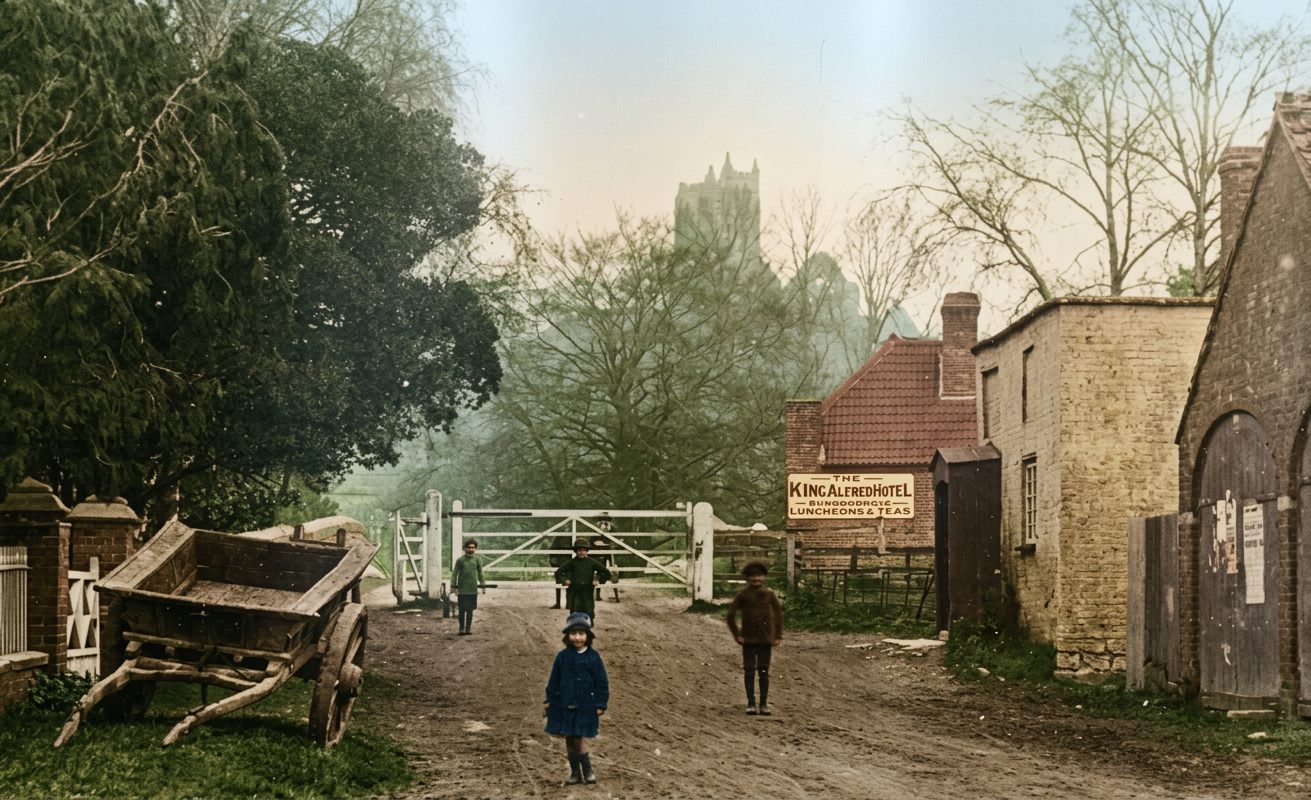
Burrow Bridge carries the Taunton to Wells road across the River Parrett at Burrowbridge. The crossing formed part of the Taunton to Wells Turnpike, a route established to improve movement between Taunton, Wells, and the wider Mendip region. The present bridge was authorised under an Act of Parliament in the reign of George IV, which empowered appointed Commissioners to demolish the earlier structure and replace it with a new one. Construction was completed in 1826 by John Stone of Yarcombe.
To recover the cost of construction, the Commissioners introduced a toll system. Charges were set by category: one farthing for each calf, swine, sheep, or lamb; one halfpenny for each ox or cow not dragging; and one penny if the animal was dragging. With the introduction of motor vehicles, the minimum toll for cars became threepence, rising to 1s 6d for heavy vehicles. Over the lifetime of the toll, more than £24,000 was paid for the rights, with annual lettings ranging between £41 and £1,830.
The toll rights were auctioned annually at the Langport Arms Hotel. A sandglass was used to regulate bidding: it was turned after each bid, and if three turns passed without a new bid, the final bidder secured the rights. The purchaser gained use of the toll cottage beside the bridge (now demolished) and the authority to collect tolls for twelve months from noon on 1 April.
Burrow Bridge is no longer a toll bridge. The toll system was discontinued on 1 April 1945, ending more than a century of toll collection on this section of the Taunton to Wells Turnpike. The bridge has since operated as a standard public crossing, with maintenance transferred to public authorities following the dissolution of turnpike trusts across England.
The bridge’s historical significance lies in its role within the turnpike network and its function as a controlled crossing point on the Parrett. Its operational history illustrates the financial and administrative structure of turnpike infrastructure, including investor funding, Commissioner oversight, and annual toll‑farming. The modern road bridge remains the 1826 structure, but without any toll‑related function.

